Vistas de audio análogo en el pasado High End Show de Alemania


La nueva tornamesa Clearaudio por solo 995 Eur y fabricada en Alemania puede no ser novedosa suficientemente, tampoco la Thorens TD 309 aun con su vistozo acabdo rojo, he otorgado el lugar destacado en esta ocasión a una tornamesa que es "música en sí", un peculiar diseño italiano de Horo, la WJE 168, una tornamesa que evoca la forma de un pequeño piano y que por brazo emplea un arco de violín o algún instrumento similar. Al fondo de la foto vemos al diseñador.

Ver para creer.

Artículo sobre Burmester en Financial Times Deutschland arroja algunos datos interesantes.

¿ Qué amplificadores usa a nivel personal el director de electrónica de consumo en Samsung Corea ?
¿ Cual es el precio promedio de un sistema de audio en Alemania ? Este dato nos impactará, si allá ese es el promedio ¿ Que podemos esperar nosotros aqupi en México ?
¿ Qué sistema de sonido usa el Bugatti Veyron y el nuevo Porsche Panamera ?
¿ Panamera de Porsche es el modo mas sencillo de adquirir un Burmester ?


Grundig's heirs
Burmester still relies on real craftsmanship
Ulf Brychcy (Berlin)

The mass of consumer electronics products for a long time coming from Asia. But a number of German company claims according to quality Made in Germany is still on the market. Until the start of the Ifa FTD.de presents a few of them. Today: Burmester audio systems.

Welcome to the world of true luxury. A CD player for 28,900 euros? A Stereovorverstärker for 27,900 euros? Two boxes for 49,900 euros? Dieter Burmester developing these devices, it can produce it and find it actually buyers. "Anyone who calls a beat, the Absolute, who comes to us," he says. And added: "We've done it, we build this image around the world."

Image. Or just status. For the lovers, which afford a sound system by Burmester, it will probably be a mixture of both - probably next to the urgent desire to listen to music to perfect at home.

In any case, it is less simple when Burmester devices to a purchase as an investment - for a very manageable group of customers. About the Burmester says only this much: They are almost exclusively men, it is no longer the youngest. And especially audiophile they must be. "We live mainly from customers who said to order a music system for 60,000 up to Euro 80,000, determined by the company's founder. But there are also buyers who spend 150,000 euros or more for their Burmester audio system.


Foto: http://christoferberggren.com/Arkenm%E4ssan/Burmester-setupen.jpg


The head of Samsung example has two high-power amplifiers from Burmester, massive cube with Alurippen. The group from South Korea also mixes in consumer electronics, with only just a few steps underneath. In Germany, for comparison, current price of a hi-fi systems have an average of 570 euros, which determines market researcher GfK.Therein lies the basic principle of Burmester: no mass, expensive class. Leave in only small numbers, equipment and speakers, the factory in Berlin, which is housed in a purpose-built near the railway station Südkreuz.

Here, each device is manufactured by hand. Every single room with lots of specialized electronic components that come to almost 100 percent from Germany. "Because of the reliability and quality," said Burmester. Every single Edelgerät undergoing a week-long trial run, is comprehensively measured before and after. The final inspection is then carried out in the establishment's recording studio


Burmester still relies on real craftsmanshipUlf Brychcy (Berlin)Part 2: "Music is still undoubtedly art"For 32 years, the engineer, who is also a qualified radio / TV is, an uncompromising way. But music is undoubtedly art, he says. So it should ideally also be listening. Thus, the 63-year-old with his company created a golden niche. Play here, unlike the mass producers in Asia, the cost of production - and thus the amount of the sale - practically no role.

Around 8 million euro has put his company in the past year, nearly two-thirds in foreign countries, more and more in China, but also in Europe. The economic situation of Burmester audio systems, which includes a subsidiary of electronic components and a total of 50 staff, describing the founder and owner can be at least as solid as the audio equipment that he finished. "Exorbitant profits, we do not drive a", although he says. But for that he had bank debts alien.

What the company has helped in the first half. The crisis also suggests on luxury products by, Burmester first time, suffered a sales drop of 20 percent. Since July, but going up again, he says. Since then, the orders always are higher than the previous year's months as before. Before the crisis, Burmester has grown steadily every year around 10 to 15 percent.

Burmester hopes that revenue growth from a new business. His company assembled, if customers want it and pay a surcharge of around 4000 euros, the new Porsche Panamera with an audio system including 16 speakers. Burmester was able to prevail against much larger stainless Hi-Fi manufacturers from around the U.S., which had also sought to Porsche.

The sports car maker expects that shipped annually from 2010 to at least 2000 Panamera with a facility to be Burmester. "There are customers who buy the Panamera, because they pretty much get a real cheap Burmester," says a Porsche spokesman. Burmester itself aims to achieve Edelanlagen for cars and yachts sometimes considerably more than ten percent of total sales to. These devices, however, he can produce in the order.

In Berlin, it's developers are working meticulously and he further products, the digital age requires. A server will bring Burmester now on the market and as a Radio Streamer - as always on special Burmester prices.

Guitar Hero Dieter Burmester Not the technology, but the sound is perfect for
Dieter Burmester in the first place. Just over 32 years, he has worked as a
professional musician (bass and vocals) in Berlin, his first amplifier built in
- then it became a business. Rock music, he now only plays at home in his
studio.

110 no es igual a 127, o por qué se queman tanto mis equipos

Con gusto traigo este buen artículo elaborado por mi apreciado Alex Rubli de Afaudiolab a quien tenía tiempo de no verle ni platicar con el. Su artículo sin duda resuelve algunas de las dudas y responde inquietudes que como usuarios de equipos delicados tenemso al usarlos en un suministro eléctrico tan nefasto como el de México.

110 no es igual a 127, o ¿ Por qué se queman tanto mis equipos ?
Para ser exactos, 127 volts, que es el voltaje nominal en la República Mexicana tiene un 15% más de voltaje que lo especificado para la gran mayoría de equipos que vienen del extranjero.

Mucha gente asume que un equipo diseñado para trabajar en Estados Unidos puede funcionar sin problemas en México. La regla número uno antes de usar cualquier equipo es VERIFICAR EL VOLTAJE PARA EL QUE ESTA DISEÑADO. Nos sorprenderemos que no hay un estándar.

Si bien es cierto, que muchos equipos modernos, sobre todo portátiles tienen una leyenda acerca del voltaje de operación de 100 a 240 Volts, estos equipos tienen un "selector inteligente" que no requiere de ningún
ajuste al momento de su uso. Pero hay muchos equipos, sobre todo de audio de potencia, cuyo voltaje de operación es muy estricto, con poca tolerancia de ser sobrepasado. Los equipos de bulbos son los mas delicados, pues normalmente los voltajes que utilizan sus componentes NO SE REGULAN, de tal suerte que si los bulbos de salida deben ser manejados por ejemplo con 500 volts, este voltaje es directamente proporcional al voltaje de entrada (el de pared).

Si el equipo dice 110 volts y lo conectamos en 127, los bulbos recibirán un 15% más que el diseñado (o soportado), que en este ejemplo nos arroja 575 volts. Muchos elementos no pueden aguantar esta diferencia, como los bulbos o los capacitores electrolíticos.

Todo este escenario se ve agravado, cuando consideramos que en muchas zonas en México se excede el estándar mexicano de 127 volts, algunas suelen tener, a ciertas horas un 10% arriba del voltaje nominal, es decir casi 140 volts. si regresamos a nuestro ejemplo del amplificador de bulbos que ya estaba sufriendo con 575 volts, ahora imagínelo con ¡635 volts !

Los equipos de potencia de estado sólido (transistores) corren exactamente la misma suerte, actualmente la tolerancia que soportan es cada vez mas estrecha, probablemente por economía, o porque en otros países no existen estas fluctuaciones en la corriente casera.

¿Cuáles son los síntomas cuando un equipo se expone a voltajes más elevados para los cuales han sido diseñados ?

Lo primero que se presenta es calor excesivo en las tarjetas internas, o en los bulbos, las placas se ponen rojas .

El segundo síntoma es el ruido espurio que se escucha a través de las bocinas, que es similar al que hace el papel celofán cuando se arruga. A veces es de muy baja intensidad.

Síntomas “terminales” son por ejemplo que los capacitores pueden explotar o dejar escapar el elemento electrolítico a través de sus válvulas de escape, que emite a veces un olor muy desagradable. Otro síntoma es que el fusible principal del equipo se quema, muchas veces cuando se reemplaza, el equipo puede seguir funcionando un tiempo pero si lo vuelve a quemar inmediatamente, el daño ya está hecho.

Si bien un equipo puede trabajar un tiempo con sobrevoltaje, no es garantía de que si aún no se ha quemado, no exista la posibilidad de que no lo haga o que se degrade en un futuro cercano. Esta situación se presenta también con aparatos electrodomésticos como los refrigeradores y hornos de microondas.

En la actualidad el voltaje “oficial” en los Estados Unidos es de 120 Volts y para México de 127 Volts, desgraciadamente no todos los fabricantes siguen esta norma. En Europa muchos productores prevén en sus equipos otros voltajes que pueden ser seleccionados por el usuario final, pero tampoco existe un estándar y no todos tienen las mismas opciones, razón por la que anuncian versiones “americanas” para 110 Volts.

Las normas oficiales de cada país han variado sus estándares a través del tiempo, existen equipos “vintage” de los 60’s que estaban diseñados para trabajar a 110 volts.
En la actualidad se fabrican muchos equipos para su comercialización
en los Estados Unidos que estipulan una operación distinta de los 120
volts.

¿ Qué hacer para estar protegido ?

La mejor opción para utilizar un equipo con otro voltaje de operación que el de casa, es el recurrir a un auto-transformador. Esto es un transformador con solo un devanado y tres (o mas) derivaciones . Tiene una entrada de corriente y una salida, dependiendo de la fabricación (la relación entre sus derivaciones) la salida nos provee un voltaje distinto al de entrada. Normalmente para usar equipos vintage o equipos diseñados para 115 volts, sugiero utilizar un auto-transformador de relación 130:115 . Lo importante, además de establecer la relación de entrada y salida, es la habilidad de poder entregar la potencia deseada, este dato se especifica en Watts (o Vatios), dato localizado detrás de los equipos, se conoce como el consumo. Es recomendable utilizar un auto-transformador que sea al menos 15% arriba del necesario.

Otro punto muy importante a considerar al utilizar un equipo europeo es la frecuencia de operación. Si el equipo esta diseñado para trabajar a 50Hz y 230 Volts, no es suficiente utilizar un auto-transformador de relación 230:130 pues en México la frecuencia del voltaje casero es de 60 Hz. Una fuente rectificadora no conmutada entrega un 17% más voltaje a los componentes, por lo que se recomienda utilizar una relación más
baja, por ejemplo de 230:108.

Si un equipo europeo no tiene especificación de frecuencia de operación, es necesario tomar mediciones internas para determinar si se necesita disminuir el voltaje este 17%.

Ligas relacionadas:

http://www.kropla.com/electric2.htm
Electricity around the World
http://en.wikipedia.org/wiki/Mains_power_systems
mains power systems


Alex Rubli y su Afaudiolab son expertos en actualizaciones, mejoras y servicio a equipos electrónicos con especial énfasis en bulbos, con un trato tan bueno como lo es su servicio en sí.

¿ Cual mejor ? LP vs SACD vs CD en sistema análogo del doble de precio que el lector SACD/CD

Un tema interesante en el foro de Polk Audio donde un usuario pone frente a frente un sistema análogo para reproducir discos LP contra un lector SACD/CD. El sistema análogo cuesta el doble del lector SACD/CD ¿ Cual fue el resultado a su parecer ? ¿ Te atreves a leer ?

El tema completo está en:

A Comparison Of The SACD, CD, and LP Versions Of Six Titles

El equipo usado fué este:


Source Hardware
The analog source was a Teres model 255 turntable outfitted with a Graham Phantom B-44 tonearm, Ortofon MC Windfeld phono cartridge, Sonic Purity Concepts record clamp, and Audioquest LeoPard tonearm cable. The phono preamp was a Pass Labs Xono. The MSRP of the turntable/tonearm/cartridge/tonearm cable/record clamp/phono preamp is $16,325.

The digital source was a Cary Audio CD 306 SACD Professional Version, which has an MSRP of $8000. Although the analog source's retail cost is over twice (2.04X) as much as the digital source, it did not and does not provide twice as much resolution and listening pleasure. They both provide excellent high resolution playback provided the source material is both well recorded and well transferred to disc.

Toshiba adopta Bluray


Pues se acaba de anunciar que Toshiba finalmente se unió al grupo Bluray y empezará a ofrecer productos de este tipo, interesante pues creo todos recordamos Toshiba era la principal desarrolladora del formato rival HD-DVD el cual fue cesado de producción.
Sin duda una adición de valor para Blura, en estos días que está tan cuestionada su permanencia por causa de las descargas online y posiblemente hasta del sistema CBHD (China Blue Hi-definition Disk) el cual multiplica por factor de 3 las ventas que Bluray tiene en China y que se rumorpa puede ser apoyado en breve por dos estudios de Hollywood.
Para cerrar el círculo de ironías solo comento que el CBHD es una derivación y aplicación surgida con base en el difunto HD-DVD de Toshiba.

Cerwin-Vega. ¿ A tener en cuenta por el audiófilo en presupuesto ?


Pues si ver un modelo Cerwin Vega en el Editor's Choice de la publicación online Soundstage me sorprendió, verla ahora con su modelo CLS 215 (si no mal recuerdo el mismo) con excelentes calificaciones en la revista alemana Stereoplay la convierte prácticamente en una revelación. Sin duda a tener en cuenta cuando se quiera buen sonido, un presupuesto moderado, buenos graves y sin el agudo que antes molestaba de Cerwin Vega.

http://www.stereoplay.de/Produktdaten/Cerwin-Vega-CLS-215_5792533.html


Arkivmusic.com ¿ Lo conoces ?

Esta organización y sitio web se presentan como una alternativa para facilitar la búsqueda y encuentro de grabaciones de música clásica e invitan a que si no se encuentra lo requerido se les contacte para que auxilien en esa búsqueda.

"Estamos aquí para ayudarle a encontrar música e interpretaciones que usted realmente desea y entregárselos en la puerta de su casa."

Aaron de Alemania cumple 20 años y nos invita a festejar con su nuevo XX

Aaron y Sovereign acaban de enviar un comunidcado de prensa, celebrarán su 20 aniversario de gran forma. Siendo una discreta pero excelente compañia de audio high end de Alemania está celebrando su 20 aniversario y sensibles supongo a la realidad actual han lanzado un modelo de aniversario el cual lejos de ser el típico producto insignia más bien apuesta por acercar el audio de alto nivel a un mayor numero de personas. Por 2000 Euro, tampoco muy barato pero muy razonable puede uno adquirir el XX (Double XX).


El comunicado de prensa con más información al respecto es este:


PRESS RELEASE:

~~~~~~~~~~~~~~~


An anniversary present for customers and fans. 20 years of AARON amplifiers.

Today, Thomas Höhne, founder of the High End Manufacture in Elze, surprised music lovers and fans of the AARON High End amplifiers: On the occasion of the company’s anniversary, as to the 20th birthday of the AARON amplifiers, there will be a birthday type brought on the market in Elze in Lower Saxony. A real High End integrated amplifier for only 2,000 EURO.

The new integrated amplifier called „XX“(spoken: „Double X“) will be available at selected traders and High End consultants from September.

With two times 80 Watt at 8 Ohm and two times 140 Watt at 4 Ohm speakers, the amplifier will ensure the powerful and precise playback of its owner's favorite music. However , as Thomas Höhne promises, the new High End creation does not only meet the high expectations concerning musical quality, but also the design as well as the build quality of the XX will make the hearts of AARON-Fans beat a little bit faster.

According to Hoehne, the price of 2,000 EUR for the amplifier, which is produced only in Western Europe, will shock far eastern competitors: „We are very proud that we are able to design and produce devices of this quality in the middle of Europe. We would like to maintain this level of quality for the next 20 years. “

If you would like to put a 100 EURO note on your trusted Hi-Fi-salesman’s counter twenty times, you can contact High End in Elze already. Call +49-5068-2858 to get information by telephone. Of course, queries of advance orders via e-mail will be answered as well.

http://aaron.hifi.net/

El audio multicanal para música está muerto, larga vida al estéreo.

Esta es la apreciación de Steve Guttenberg conocido analista y comentarista sobre estos temas y así lo expresó en el blog que participa en C-net, donde retoma y ahonda en un artículo aparecido en la revista Stereophile de julio llamado "Whatever happened to 5.1 channel music".
Las idas y vueltas de SACD y DVD-A y una sembalnza histórica a previos y fallidos sistemas surround para música compatibles tecnológicamente con plataformas ya establecidas y aun asi fracasaron, era previsible. El artículo comenta que el sector más duro del 5.1 para música defiende que hay sellos independientes aun grabando así, sin embargo - y esto lo comento yo - en nada cambiarán la tendencia esos lanzamientos, ya solo es un nicho.
Triste esta historia de competencias inutiles, cuando SACD se anuncio era estéreo, posteriormenet vino la vencida Toshiba con su DVD-Audio con capacidad multicanal y esto obligó a SACD a ofrecer capacidad multicanal también, a la perspectiva histórica SACD se hubiera mantenido solamente para estéreo y mejor empujar más el formato con artistas conocidos y lanzamientos actuales del mercado más general.
Si quieres música en multicanal compra los videos musicales, muchos de los cuales se relanzaran en Bluray y así visto tal pareciera también que el conflicto de intereses de la industria entre video multicanal y audio multicanal, en relación a lo que les reporta más utilidades dejaron en clara desventaja a la música multicanal.

Audio Control Concert AVR-1: Impresionante


La legendaria firma Audio Control acaba de lanzar un interesante receptor AV con la ultima tecnología ne procesamiento.

The Concert AVR-1 is AudioControl’s new surround sound receiver/controller designed to be a premium product that reflects refined styling, maximum flexibility and optimum performance for home theater enthusiasts. The high gloss of the front panel is complimented by the striking blue LED display and custom designed trim bezel. Power levels of the Concert AVR-1 are confirmed when one admires the hefty, gold plated, high current 5-way binding posts. One hundred twenty individual Input and Output connectors for video and audio connections confirm that the intention of the AVR-1 is to be the intellect of any theater system.

Designed to offer maximum system flexibility matched with advanced technology, the Concert AVR-1 supports the latest surround codex’s of Dolby True HD and DTS-HD Master along with traditional formats of Dolby Digital and DTS High Resolution. Raising the bar even more, the AVR-1 accepts signals from up to five discrete high bandwidth (1080p) HDMI inputs. The dual HDMI outputs are then assignable by the integrator to allow for priority switching via the display device. Component, composite and S-Video signals are also automatically upconverted and scaled to their maximum potential resolutions. To properly complete the signal path, the Concert AVR-1 utilizes AudioControl’s legendary Class H amplifier topology to powerfully drive even the most demanding speaker systems. Known for pristine sonics, cool operating
temperatures, and ultra reliability, this highly efficient design literally “sips” current, which helps it to satisfy even the “greenest” of customers. Despite it’s minimal current draw, the Class H design is powerful enough to drive 120 watts per channel (840 watts total), with all channels being driven into 8 ohms. The AVR-1 also has the additional ability of driving into lower impedance’s when necessary. In recent years AudioControl amplifiers have received a number of awards and accolades from listeners that confirm the high performance levels of Class H.
  • High Definition Advanced Technology Surround Sound Receiver
  • Newest Generation Technology Allows Scaling and Processing of all Sources
  • Seven channels of Cool running Class H amplification
  • High Current, Gold Plated 5-Way Binding Posts
  • Controllable via IR, RS-232 serial and Ethernet commands
  • Streaming audio via Ethernet or USB
  • Decodes Dolby® TrueHD and DTS HD Master® Lossless Technologies
  • Three Zone Outputs
  • Dolby® Volume for Optimum System Balance
  • 1080p HDMI switching for five sources
  • Dual assignable HDMI outputs with priority switching
  • Upconverting to HDMI of component, composite, and S-Video inputs
  • Sirius Satellite Capable (w/optional tuner)
  • Five Year Warranty

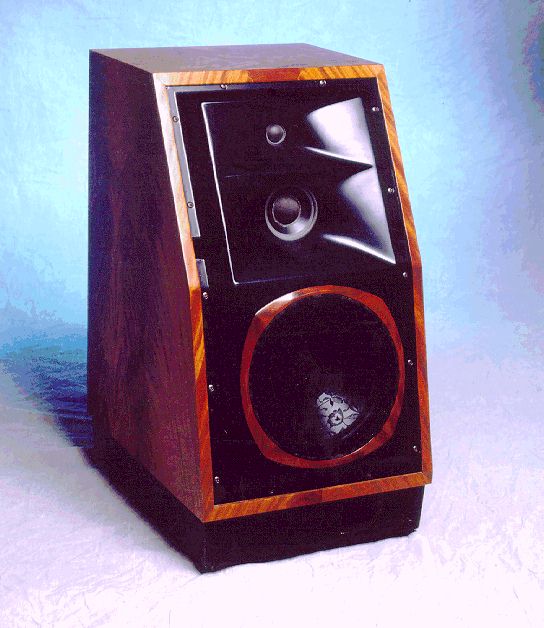
Unas bocinas diferentes: Aurus PM desde Suecia

PM is a three-way loudspeaker system which I started to develop in the mid-seventies. The goal was to construct a loudspeaker that was able to reproduce the real acoustic environment from the recording. Discussions about time-delay in those years, which were confirmed by measurements, led me to a design with a complex baffle and exponential horns. Later on I've made fibreglass moulds for casting the baffle in concrete. The sound from this loudspeaker is something you must experience. It really is competitive with the "big" names on the hi-fi scene.
The PM loudspeaker is a three-way system with a 10" Peerless CC-line woofer, a 4.5" Peerless midrange, and a 1" Peerless soft-dome tweeter. The midrange and the tweeter are mounted at the back of the baffle in exponential horns with machine screws and nuts in the cast concrete. The woofer is mounted in the same way at the front of the baffle. The baffle is designed to produce low diffraction effects and to have a nice appearence, and care is taken to handle the time-delay between the midrange and the tweeter. The exponential horn, especially for the tweeter, works as an acoustic transformer, and the benefit of using it in the design is that, when you compensate for the amplification of the horn in the filter, you also lower the distortion. The use of the horn loading also allows you to place the treble in the correct time-delay plane. The effect of the midrange horn is not as good as for the treble in my design, because of the impossibility of integrating a horn of the full required size that would be needed in the PM's baffle. I had to compromize in that matter, as in the matter of the amount of time delay between the woofer and the midrange. I shifted the polarity of the woofer instead so that I came up with a time delay error corresponding to only a few centimeters in distance. The concrete baffle is mounted in the enclosure with wooden sqrews so that you can change a driverif anything should happen. The design of the baffle was quite a drawing and calculating experiencein the mid-seventies, as in those days I only had a pocket-calculator at my disposal. The design involved both calculatingexponential curves and geometric drawings to get the right angles of the drivers to make themcoincide at a proper listening distance. But the design really was correct, which I found out later when I started measuring the PM's acoustic responce. The slope of the baffle also places the sound "image" at a good height even though the loudspeaker is not very tall. The enclosure is made of veneered 16 mm MDF exept for the bottom and the back of the enclosure.These pieces are made of 22 mm veneered birch-plywood. The veneer used for the enclosure in the picture on the homepage is called pyramid-mahogany. I've also veneered in birds-eye maple, padoc, American walnut, ash, Nordic pine, cherry and some others. It all depends on each person's individual taste. The bass vent is tuned to about 25 Hz. The midrange has a separate chamber that is also vented. The midrange vents come out in the front at both sides of the baffle. The bass vent is placed in the enclosure base where the crossover filter also resides. Both the woofer and the midrange are acousticly damped; that is, you put the damping material at the back of the driver basket. This is a damping method that is not commonly used, but it is recommended by, for example, Doctor R.H. Small. Adding this type of damping allows you to adjust the driver Thiele-Small parameters. The PM's outside dimensions are: W = 37.5 cm, H = 71 cm (including Sonic Design damping feet which I use to minimize vibrations in the enclosure) and Depth = about 48 cm. The crossover filter used in the PM's includes CFAC inductors in series with the woofer and midrange, and MIT capacitors in series with the treble. The other elements in the filter are polypropylen capacitors and non-inductive resistors. The crossover frequency between the mid and treble is roughly 4000 Hz with a 6 dB/octave slope on the treble and 6-12 dB lowpass slope on the midrange. The woofer-midrange crossover is at about 400 Hz and uses filters with 6-12 dB/octave slopes. In the 6-12 dB/octave filters you start with a 6 dB/octave filter and then you cut 6 dB/octave more at about one octave higher (or lower). The filter is hard-wired. The filter construction is computer optimized using the CALSOD software package and fine-tuned by listening. Special attention has been paid to the impedance responce to produce a "nice" load for tube amplifiers. The PM loudspeakers was tested in a Swedish magazine about two years ago and the journalist found them really capable of reconstructing the "acoustic room". He also made a bass test where he used a 40 Hz and a 100 Hz tone and drove the loudspeaker to a distorsion level of 10 % and then checked the output level at 1 m. The PM's had exactly the same level at both 40 and 100 Hz, and it was comparable in level with another loudspeaker in the test with 18" woofer. The PM's have really got a tight and clean bass responce and with a capability of playing very loud. You get that subwoofer feeling withoutrumble. The "imaging" is almost perfect because of the clean mid-bass and the homogenity between the drivers, which makes you "see" the whole recording room. Someone called the reproduction quality "seemless". This person also said that he never before had that feeling of "having the whole symphony orchestra in his room".

Kaiser Acoustics

La atención al detalle y refinamiento de tecnología y construcción solo reciben justicia en esta increíble sala de audio. http://www.kaiser-acoustics.com/

Soluciones acústicas moviles


Lamentablemente esto es en Austria, una interesante propuesta de adecuamiento acústico in situ y no fijo, creo que no nos vendrían mal unos de esos paneles en muchos cuartos audiofilos.

Claro que también ofrecen soluciones un tanto más "convencionales" para adecuamiento acústico en casa para cine en casa.


Abrahmsen V1.0 CD desde Noruega


.:Specification

The V1.0 is a CD player with a newly developed advanced electro-mechanical damping system (EMD). This will give you a more exact reading of the CD disk. The V1.0 is equipped with fully balanced XLR outputs meant to be used with preamplifiers with balanced inputs, such as the Abrahamsen V3.0.It has a volume control for the analog outputs, and a coaxial output that let you use it with other digital recorders and amplifiers.The V1.0 features a fully balanced 192 KHz Class A D/A converter with 24 bit upsampling and soft filter -3dB 80 KHz.The remote control is compatible with the rest of the products in the V-series.

Plays CD/CD-R/RW Frequency response:10-20.000 Hz +/-1 dB Signal/noise: >100 dB THD: 0,002 % 24-Bit/192 kHz D/A Converter24-Bit/192 kHz Upsampler 1 Pair output XLR (balanced) 1 Pair output RCA (singel) 1 digital output (coaksial) Ring core -transformer LCD-display Digital volume control Remote controlWidth 430mmHeight 105mmDepth 321mmWeight 7.5 kg

Symphonic Line RG 6 Das Laufwerk


WEGE ZUM SCHALLPLATTENGENUSS


RG 6
Das Laufwerk. Damit loten Sie die Klangschönheit und Farbpracht der Analogwiedergabe aus. Bei völliger Ruhe.
23.000 Euro

Gebaut für die Ewigkeit. Lagerboden aus Widia, Lagerachsendurchmesser 16 mm, Bestehend aus den separaten

Werkstücken Motorgehäuse, Lager mit 25-kg-Teller + Puck, 1 Tonarmbase nach Wunsch, Trageplattform,

Powernetzteil mit 100.000µF + Trafo 330 VA + Steuereinheit. RAL-lackiert nach Wunsch, Knöpfe und Puck vergoldet.

Sie wählen die Oberfläche. Inkl. edler Marmorgrundplatte, Audiobasis, Stroboskop, Matte und Netzfilter.

Drehzahl: 33-45-78 U/min. Test: Absolute Sound, USA, Mai 1992: Musikalisch nicht zu beschreiben.

Zeigt im Vergleich die Grenzen digitaler Wiedergabe auf.

Tunning Chip: ¿ Física en el sonido o más de lo mismo ?

Para los escépticos clásicos estpo será más de lo mismo sin embargo el grado de aceptación y resultados y no solo en audio si no en electrónica en general no me deja duda que algo encierra este nuevo desarrollo de Creaktiv / Audio Selection.

Para su valoración, toma tiempo son 5MB aproximadamente.


Y aquí un documento sobre los fundamentos de este producto, el Tunning Chip

harman kardon aun sabe diseñar buenos reproductores de CD

Reconocido con el Stereoplay Highlight de la rvista alemana Stereopley (07/09) el reproductor HD 990 muestra que harman kardon aun recuerda al audiofilo y le provee un equipo decente para su gozo.


Con un excelente conjunto de entradas y salidas, incluyendo balanceadas (XLR) este aparato por 600 euros se aprecia muy atractivo pero, solo es para ese otro cliente audiofilo por excelencia, es decir no para el consumidor en América si no para el europeo que junto al asiatico gozan de gran cantidad y opciones de marcas, donde aun marcas ya opacas en América en el audio HiFi y high end como harman kardon orecen productos refinados.