Nos hicieron llegar estas imágenes, un sistema de México D.F. el cual satisface al gusto clásico con una magnífica tornamesa VPI, brazo Audioquest y fonocaptor Denon con pre de fono Krell, pero también va acorde a los tiempos con un iPod (WAV) la base Wadia iTransport, DAC PS Audio y un reproductor de CD Onix. Preamplificación a bulbos Ozval Audio, amplificación clase D modificada por Ozval Audio así como un amplificador opcional clase A que no se alcanza a apreciar. Bocinas B&W y Aletheia A-25 invitadas; cableado Audioquest y Groneberg. Combinando dedicación y gusto este sistema suena tan bien como atractivo luce a la vista, ciertamente complace. Gracias a nuestro buen amigo audiófilo Jorge B. por invitarnos a conocer su sistema.
Un sistema que conjunta lo clásico y lo actual con un excelente sonido.
Etiquetas:
Aletheia A-25,
Aletheia Audio Verrichtung,
Aletheia AV,
audiofilos México,
Audioquest,
BW,
fonocaptor Denon,
Groneberg cable,
iTransport,
Krell,
Ozval Audio,
PS Audio,
VPI,
Wadia
Magico, Wilson, y YG se unen
Magico, Wilson, and YG Merge - Audiophile Review
Espectacularr anuncio sobre la union de tres de los más destacados, laureados y ovacionados fabricantes de bocinas, habrá que ver las nuevas creaciones que preecios ostentarán.
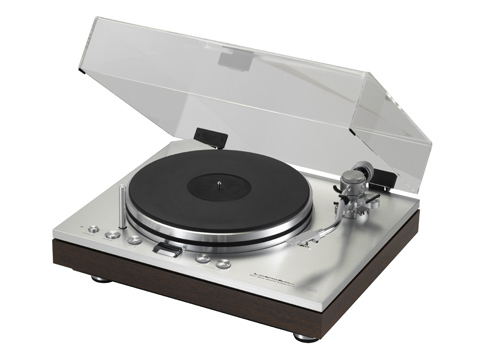
Luxman se integra de nuevo al audio análogo
Este es el nuevo modelo de tornamesa Luxman, la compañía japonesa que tras 28 años de ausencia tiene nuevamente presencia en el audio análogo. Modelo PD-171, "Made in Japan", precio 6500 USD.
http://stereo.de/index.php?id=449&tx_ttnews[tt_news]=1386&cHash=afe386ecf8
¿Quién hizo qué?
En lo que respecta a los viejos discos de acetato y vinil:
Edison inventó los discos de 78 rpm
Columbia los de 33 1/3 rpm
y RCA los de 45 rpm
Edison inventó los discos de 78 rpm
Columbia los de 33 1/3 rpm
y RCA los de 45 rpm
SRS Labs en busca de un revolucionario modo de grabación y reproducción de audio.
SRS Labs, conocido por sus sistemas de sonido ambiental virtuales está proponiendo un revolucionario modelo para grabación y reproducción musical basado en objetos. Hace tiempo yo le comentaba a algunos amigos sobre un sistema en que los canales se definiran por instrumento y su rango de frecuencias, creo que esto es algo similar.
http://www.pcmag.com/article2/0,2817,2398588,00.asp
La propuesta se basa en la idea de audio multidimensional, que se enfoca en el audio en términos de objetos, en lugar de canales (como sucede con estéreo - dos canales - o sonido envolvente de 5.1 canales). En lugar de mezclar pistas individuales de instrumentos en una canción, o mezclar sonido ambiental, efectos de sonido y diálogo en la pista sonora de una película, el ingeniero toma esos trozos de audio y los dirige exactamente a donde van en la configuración física de las bocinas del escucha, así como la intensidad con la que deben reproducirse.
En otra spalabras, en lugar de que el ingeniero produzca un producto final estático, que se reproduce del mismo modo independientemente de que sistema lo está reproduciendo - pudiendo ser un mal sistema o estar mal configurado - el ingeniero produce un conjunto de meta-datos, completo con instrucciones digitales de donde y como los trozos musicales se reproducen. Entonces un "renderer" compatible con MDA, sea via software o interno en equipos de audio para consumidor, decodifica los datos de modo correcto para el sistema de reprducción del usuario.
Esto a la vez permitiria que las personas pudieran tener eventualmente la posibilidad de crear sus propias versiones echando mano de su propia creatividad y gusto.
"...multi-dimensional audio, which focuses on audio in terms of objects, instead of in channels (such as two-channel stereo, or 5.1-channel surround sound). Rather than mixing individual instrument tracks in a song, or mixing ambient sound, sound effects, and dialog in a movie's audio track, the engineer instead takes those audio pieces and directs exactly where they go in the listener's physical speaker configuration, as well as how loud they play."
"In other words, instead of an engineer producing a finished, static mix that plays back the same way regardless of how the playback system is setup—and if the playback system isn't any good or set up incorrectly, tough luck—the engineer produces a finished bundle of meta-data, complete with digital instructions on where and how all of the audio pieces play. Then an MDA-compatible renderer, either in software or built into consumer electronics components, decodes it properly for the listener's playback system."
Escogiendo conveniencia sobre calidad
Matt Hill is a musician, music educator and The Echo's CD reviewer.The other day I heard that Neil Young was on his crazy high horse again, complaining about digital music, particularly the MP3 format and how poor it sounds."The MP3 only has 5% of the data present in the original recording… The convenience of the digital age has forced people to choose between quality and convenience, but they shouldn't have to make that choice," Young said. He urged young fans to stage a grassroots movement, calling it 'Occupy Audio'.Young's battle against digital goes back a long way. In 1992 he said "from the early 1980s up till now (1992) and probably for another 15 years to come - this is the darkest time ever for recorded music. We'll come out on the other end, and it'll be okay, but we'll look back and go, "Wow, that was the digital age. I wonder what that music really sounded like."The arguments over superior audio formats go back well beyond the current digital vs analogue, vinyl vs CD vs MP3 era. In his recent book Perfecting Sound Forever, Greg Milner provides a wonderful history of recorded music. In the early 1900s the battle was between Thomas Edison's phonograph (a cylinder) and Emile Berliner's cheaper gramophone (a disc). Berliner won that battle on a commercial level but then things moved on to acoustic vs electrical recording and later to 33rpm vs 45rpm formats, 16-track tape vs 24-track tape in the studio and eventually on to CD vs vinyl or cassette.In the early 1980s major record companies like CBS and A&M vehemently opposed the introduction of the CD. The boss of the major record label CBS told the Japanese manufacturers (Sony and Philips) that they would only build a CD making plant if the Japanese would first buy out their cassette making factory. The message from the record labels was that they were tired of being led up the garden path by format changes. By the early 1990s the CD had taken hold and the record companies grew fat again by virtue of people replacing their old tape and vinyl collections with CDs. Then they started crying foul when illegal downloading started up with the MP3.Looking at this history it seems to me that convenience always wins over quality. However I think it's a bit elitist to dismiss cheaper, more convenient formats. High quality audio is like organic food, or maybe a new car. Once you've tasted the quality it's hard to go back. But you may need to re-order your priorities so you can afford it, and for many people that's just not an option. Neil Young has spent a lot of time in recording studios with some pretty expensive high quality equipment. If your benchmark for listening is a $20,000 set of speakers in an acoustically-perfect room, what hope do you have enjoying music coming out of some iPod earbuds while you're on the train?There is always going to be a small corner of the market that will buy quality audio, just as there is a market for high quality in most things. Evidently there are some folk who are happy to pay $35,000 for a car, or $60 a month for Pay TV or maybe even $20 for a kilo of blueberries. My priorities include listening to good quality audio when I can, so I forego the fancy car, the Pay TV and the boutique blueberries. I'm grateful that Radiohead offered their latest album for download in both MP3 and higher quality WAV format.If I have to complain about MP3s it is more about the loss of the musical piracy skills that I learnt as a kid. There was dedication involved. You had to know which blank tape to buy, how to set the levels, how to cue up a tape, how to avoid the sound of the needle drop on your recording. Then there was the mysterious art of putting two complementary albums on the one tape so you weren't always rewinding one side, or selecting just the right tracks in just the right order for the perfect mix-tape. Then there was the laborious task of writing out the tracks on the cover, the fiddly stickers, taking out the tabs on the cassette to stop you taping over it. Now you just click download and you're away.Come to think of it, I don't miss the old piracy ways at all. Just bring on the NBN so downloading a WAV file won't take so long.
Como se Hace : Tornamesas
Para su deleite, el proceso de fabricación de esta magnífica Wilson Benesch.
Surge la alianza TEAC + Onkyo
Se dió a conocer que estas dos compañias han forjado una alianza para desarrollar sinergias conjuntas trabajando en áreas de investigación y desarrollo.
Muchos cambios se están dando en la industria en meses recientes y esta noticia lo confirma.
Fuente: Stereo.de
El mito del elevado ruido ultrasónico en el SACD
Aunque desde hace timepo los anti SACD/DSD objetavan el supuesto elevado ruido ultrasónico de este medio, análisis recientes muestran al DVD 96/24 con -120dB @ 20 Hz y con SACD -120dB incian en 23kHz.
La cifra del SACD es mucho mejor que la de cinta o LP, con LP´s el ruido ultrasónico puede ser incluso tanto como 50% de la señal.
Adicionalmente SACD incorpora filtros ultrasónicos.
Moraleja: Lástima que el SACD no se expandió, ¿LP? No gracias.
http://audaud.com/2011/12/audio-news-for-december-30-2011/
IRENE/3D al rescate de viejos discos análogos.
En el Laboratorio Nacional Lawrence Berkley invesigadores haciedno uso de fotografía están restaurando y reconstruyendo grabaciones contenidas en viejos discos, ya recataron una grabación de 125 años de antigüedad.
http://audaud.com/2011/12/audio-news-for-december-30-2011/
Scientists Resurrect Damaged Analog Audio Discs Via Photography – At Lawrence Berkeley National Laboratory, researchers are restoring old analog discs—some with whole sections missing—by taking hi-def pictures of them, reconstructing missing parts, and then playing the digitized discs with an emulated stylus. The system is called IRENE/3D, allowing the researchers to repair the discs digitally. They started by recovering some 125-year-old recordings made by a team in Alexander Graham Bell’s Volta laboratory. The all-digital system offers a hands-off way to recover audio from relic recordings without risk of damaging the originals in the process.
BD32 el reproductor universal de Primare que es una ganga audiófila
Un aparato que ha recibido muy buenos comentarios, por 3600 Euros no es barato sin embargo aun así lo marcan como una excelente compra y una ganga.
Información del producto:
http://www.primare.net/assets/_managed/products/files/BD32_productflyer.pdf
Prueba de uso:
http://www.primare.net/product.asp?ProductID=52&d=5&c=1
Información del producto:
http://www.primare.net/assets/_managed/products/files/BD32_productflyer.pdf
Prueba de uso:
http://www.primare.net/product.asp?ProductID=52&d=5&c=1
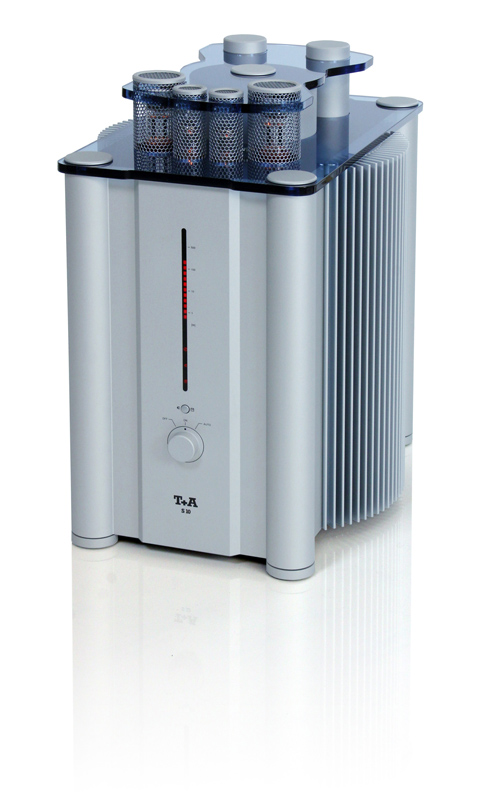
Sorprendente amplificador híbrido de T+A
Zuwachs bei T+As V-Serie: Nach der Mono-Endstufe M 10 kommt jetzt die Stereo-Version S 10, die im Prinzip baugleich aufgebaut ist, nur eben zweikanalig. Beide Modelle arbeiten in der Eingangsstufe mit Röhren in Class-A-Technik, im Leistungs-Abteil dagegen mit Hochleistungs-Transistoren. Für die S 10 gibt T+A eine Ausgangsleistung von 500 Watt je Kanal an. Wer so viel Leistung aber nicht braucht, kann in den „High Current-Mode“ umschalten, bei dem der Ruhestrom verdoppelt wird und bis 35 Watt im reinen Class A-Betrieb bereit stehen. Auf eine Über-alles-Gegenkopplung konnten die Entwickler verzichten. Drei voneinander unabhängige Netzteile mit drei Ringkerntrafos liefern die Energie – eines für die Röhrenstufen und zwei für die Leistungsstufen, wobei eine Siebkapazität von nicht weniger als 180.000 µF zur Verfügung steht. Der empfohlene Verkaufspreis liegt bei 11.490 Euro.
Ozval Audio CVV1 Preamplifier
Con mucho gusto y entusiasmo anunciamos también la linea Ozval Audio, amplificadores y preamplificadores así como la opción de desarrollos al gusto, ingeniería y desarrollo mexicano empleando los mejores componentes y logrando una relación costo beneficio excepcional, el preamplificador CVV-1 es uno de nuestros favoritos. Construcción robusta, componentes de excelente calidad y un precio razonable brindan un sonido que en verdad le invitamos a conocer.
Billy Johnson de Audio Research
http://stereo.de/index.php?id=449&tx_ttnews[tt_news]=1267&cHash=7106cc194d
http://www.nomono.dk/node/990
¿ Onkyo Les Paul o Gibson Integra ?
Me estoy enterando apenas que Gibson, el famoso fabricante de guitarras eléctricas, ha comprado participación mayoritaria en Onkyo USA 51% y de 15% en la matriz Onkyo de Osaka, Japón para desarrollar su linea profesional y esto es la segunda movida de Gibson en solo un mes pues acaba de comprar al Stanton Group que es dueña y fabricante de equipos para Dj como Stanton pero también de Cerwin Vega, así mismo KKR también es propiedad ya de Gibson. Estamos por ver sin duda un proceso de consolidación en la industria más amplio, proceso que ya inició hace años con Klipsch, Audiovox, D&M, Bosch ahora con ElectroVoice y Behringer y su Music Group, la fallida venta de harman hace años y la consolidación de diversos grupos tanto en el audio profesional como en el residencial, cambios que no necesariamente son para bien del consumidor ni de la calidad de audio.
Retomando el tema, Gibson pretende formar una empresa conjunta basada en Hong Kong y en ella desarrollar "productos de audio sin paralelo"
http://stereo.de/index.php?id=449&tx_ttnews[tt_news]=1282&cHash=3e613e0905
http://www.majiroxnews.com/2012/01/08/hello-gibson-boombox-goodbye-onkyo/
http://www.commercialappeal.com/news/2012/jan/04/gibson-guitar-announces-partnership-deal-japans-on/
Fonel Audio
A la vista seguramente no resultan atractivos como otros equipos, sin embargo encuentro regularmente reportes sobre el magnífico desempeño de estos equipos, una de tantas compañias discretas que ofrecen delicias auditivas.
Preamplificador y reproductor CD Simplicité Plus
Preamplificador Renaissance
Bocinas La Grande
Preamplificador y reproductor CD Simplicité Plus
Preamplificador Renaissance
Bocinas La Grande
Suscribirse a:
Entradas (Atom)