


B.M.C. Audio: Stereo Amplifier CS2 -
Stereo Amplifier CS2 - B.M.C. Audio
¿Qué tal esta belleza?


¿Qué tal esta belleza?
Unlike other amplifiers, a LEF amplifier handles a speaker's current demand separately from the voltage demand. The result is an unparalleled mastery of musical complexity that brings to startling life delicate details, rock-shaking power, high dynamics, sonic vitality, and accurate imaging — all on a three-dimensional soundstage.
Load-Effect Free amplification is a new experience that must be heard to be fully appreciated.
The CS2 also boasts solid output power: 2 x 200 watts into 8 ohms, and 2 x 350 watts into 4 ohms.
A fully regulated power supply with a 2kW toroidal transformer and balanced current capacitors provide the muscle behind the music.
Comet Convertidor Digital a Analógico,

Benefits:
- Designed for real-life listening with sound that’s amazing, whatever the setting
- Easy digital upgrades for hardware and software
- Controlled by the Exogal Remote App for Android or Apple iOS
Features
- Asynchronous USB, AES/EBU, SPDIF, Toslink, and line level Analog input
- Direct connection analog outputs with 32-bit Digital Volume Control
- Analog Outputs: one pair balanced (XLR), one pair unbalanced (RCA), one stereo Headphone
- Single ended and balanced analog outputs can be used simultaneously. Single ended outputs can be programmed as stereo, or center/subwoofer operation. Single ended outputs have a programmable offset level from balanced outputs
- Controlled by the Exogal Remote App for Android phone or tablet (running 4.3 or higher with BLE support) or an iPad, iPhone 4s or newer, or iPod Touch.

Realistic Solo 4 un clásico de la recién difunta Radio Shack
Gracias a www.radioshackcatalogs.com podemos recordar ese universo de emociones y descubrimientos que era Radio Shack y que lo fué por décadas para muchos.
Una lamentable víctima más de la baja y repudiable cultura de consumo en electrónica que prevalece hoy día.
La Solo 4 fue uno de lso modelos de más venta en su tipo. Aquí una entrañable crónica sobre algunos aspectos de esta cadena http://www.cepro.com/article/rip_radio_shack_consumer_electronics_icon_in_memorium/

Una lamentable víctima más de la baja y repudiable cultura de consumo en electrónica que prevalece hoy día.
La Solo 4 fue uno de lso modelos de más venta en su tipo. Aquí una entrañable crónica sobre algunos aspectos de esta cadena http://www.cepro.com/article/rip_radio_shack_consumer_electronics_icon_in_memorium/
Pagando... ahora Hitler se entera y encoleriza por que Denon ya no fabrica la DL-S1
Tal parece que pagará con tortura audiófila.
Hilter y el dilema audiófilo de cables y pruebas ABX
Bueno hay que reir un poco, primero de lo que ceemos y luego de lo que otros creen a fin de tomar un poco de balance y equilibrio y poder mantener la mente despejada, unos dicen, otos prueban, cada quien.
Este video de la excelente "Der Untergang" ha dado para toda burla, parodia, crítica y simple chiste pero creo nunca imaginamos ver a un histérico Hitler hablando sobre audio, cables y pruebas ABX.
The Analogue Productions hace por fin justicia al SACD con relanzamientos Living Stereo de RCA | The Absolute Sound
The Analogue Productions RCA SACDs | The Absolute Sound

A tener en cuenta estos relanzamientos muy apegados al LP original de la aclamada serie Living Stereo de RCA y que ofrecen un mejor sonido con las virtudes también del sonido original explotando de manera debida e inteligente las cualidades del SACD y no como sucedió con los primeros lanzamientos de esta colección en SACD. Un buen trabajo por The Analog Productions.


KORG INC y Noritake Co. crean el bulbo del siglo XXI ¡Por fin!
KORG INC and Noritake Co., Limited Release Innovative Vacuum Tube: the Nutube | News | KORG

http://www.korg.com/us/news/2015/012212/
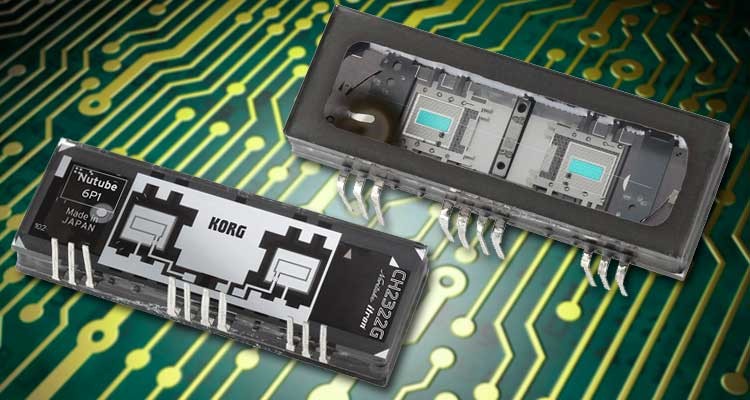
Años de vivir en el pasado sin innovaciones ni mejoras sin embargo el bulbo siempre respaldado por sus cualidades y sus fieles seguidores ha prevalecido y hoy Korg y Noritake han creado el bulbo que bien podría tomar la estafeta en el siglo XXI, el Nutube (6P1). Un nuevo desarrollo, alejado del aspecto convencional del bulbo pero que tiene bastantes ventajas sobre este:
- Bajo consumo. Consume menos del 2% de energía que un bulbo convencional.
- Compacto. Ocupa menos del 30% del volumen de un bulbo convencional.
- Alta confiabilidad y larga vida de uso. Hasta 30,000 horas de uso continuo
http://www.korg.com/us/news/2015/012212/
Symphonic Line pre de fono: HiFitest.de nos regala una espectacular radiografía
Trataré de copiar y traducir algún texto de este análisis, sin embargo las simples fotos nos dejan ver lo superlativo de este pre de fono de Symphonic Line.
No, no se trata de un amplificador, es un preamplificador de fono de referencia


Messtechnik-Kommentar: Auch wenn der Entwickler messtechnische Meriten herunterspielt: Die Symphonic Line Phonovorstufe lässt sich diesbezüglich nichts zu schulden kommen: Der Frequenzgangschrieb offenbart ein erfreuliches Maß an Linearität, die Fremdspannungsabstände sehen mit 84,2 Dezibel(A) bei MM, 5mV und 64,3 Dezibel bei MC, 0,5mV sehr gut aus. Der Klirr beträgt vernachlässigbare 0,08 bzw. 0,008 Prozent, die Kanaltrennung 67,1 / 62,2 Dezibel. Die Verstärkungen sind praxisgerecht gewählt: 40 Dezibel bei MM, derer 60 bei MC.
Metrología comentario: Aunque los méritos metrológicas desarrollador resta importancia: La etapa de fono Symphonic Line puede tener esto será nada malo: La respuesta de frecuencia Wrote revela un grado agradable de linealidad, consulte las distancias externas de voltaje con 84,2 dB (A) en el MM, 5 mV y 64 3 decibelios muy bueno en MC, 0,5 mV. El THD es insignificante 0,08 y 0,008 por ciento, la separación de canales es de 67,1 / 62,2 decibelios. Las ganancias son elegidos práctico: 40 decibelios en MM, de 60 años de los que están en MC.

Fazit
Die neue große Phonovorstufe aus Duisburg kann’s einfach: Sie spielt äußerst lebhaft, leuchtet Räume enorm tief aus und fördert jede Winzigkeit aus der Plattenrille zutage. Mit ihren zwei kompletten Verstärkerzügen sind ihre beiden Eingänge denkbar konsequent realisiert.
Conclusion
The new large phono preamp from Duisburg's can easily: She plays very lively, lit rooms enormously deep and encourages each minuteness of the record groove evident. With two complete amplifier trains her two inputs are implemented consistently conceivable.
Los formatos físicos siguen dominando en Alemania | Billboard
German Music Market Up in 2014 on Continued Strength of CDs, Rise in Streaming | Billboard

Mientras que en EUA y sus satélites ideológicos de mercadotecnia y "trends" juran y perjuran que el CD ya se murió, que el LP resurgió (aunque solo tenga >2% del mercado) y que el futuro son los serivicios digitales y ya ni siquiera las descargas, el mercado alemán (y también el japones) pone un alto a esas afirmaciones, mostrando que ahí los consumidores marcan la pauta y no las campañas de mercadotecnia desde las corporaciones con todo y su "Alta Resolución".
Dato:
En 2014 los formatos físicos dominaron con el 75% del total de negocios en Alemania y además el mercado se mantiene con ligero crecimiento. Aunque descendió 1% la cuota de mercado de los medios físicos respecto al año anterior ya se detuvo la tendencia que fué de -2% en el 2013 y en años anteriores
Esto fomenta mi parecer, que la gente no compra medios físicos cuanod los artistas no valen la pena, pero cunado además de ello y por ende hay un gusto real hacia la música y no hacia los hits de productos plásticos y huecos, masificados, entonces la lógica cambia.
"Seven of the ten most successful albums were from national artists, according to the German trade magazine Musikmart. The most successful albums in 2014 were from: 1. Helene Fischer; 2. AC/DC; 3. Unheilig; 4. Xavier Naidoo; 5. Pink Floyd; 6. Herbert Grönemeyer; 7. Peter Maffay; 8. Kollegah; 9. Santiano; 10. Andreas Gabalier"
CEC TL 0-3.0
CEC THE DRIVE | SINCE 1954

http://www.cec-international.com/
Único en su tipo CEC ofrece lectores digitales operados por banda. Me da gusto ver que esta compañía sigue operando en un entorno cada vez más complejo y hostil, justo ahora que estoy revisanod viejos "bookmarks" encuentro un cementerio de compañías ya no disponibles afortunadamente CEC que opera desde 1954, 60 años de edad, sigue en pie.
Este es su modelo de transporte TL03.0
http://www.cec-international.com/
Único en su tipo CEC ofrece lectores digitales operados por banda. Me da gusto ver que esta compañía sigue operando en un entorno cada vez más complejo y hostil, justo ahora que estoy revisanod viejos "bookmarks" encuentro un cementerio de compañías ya no disponibles afortunadamente CEC que opera desde 1954, 60 años de edad, sigue en pie.
Este es su modelo de transporte TL03.0
In every respect the new CEC TL 0 3. 0 CD Transport embodies a level of perfectionthat is unprecedented and breathtaking. Handcrafted and assembled in Japan, each TL 0 3.0 is rigorously tested after completion and then "burned in" before being certified.
CEC is legendary for precision. Conventional CD transports tend to amplify even the slightest vibration in the reflective surface of the disc due to the distance the laser beam has to travel. These microvibrations scatter light and reduce the integrity of the digital data stream. The TL 0 3.0's revolutionary three part chassis suppresses micro-vibrations and resonances that cause unwanted jitter in the data stream.
The elimination of jitter greatly reduces the distortion that too often characterizes CDs as digital rather than musical. CEC has achieved superior isolation of the TL 0 3.0 drive mechanism by using three spiked feet and a rubber damped three-point suspension.
CEC has achieved superior isolation of the TL 0 3.0 drive mechanism by using three spikes rubber damped suspension.The drive mechanism is a massive 30 mm sandwich of non magnetic materials with dissimilar resonances: a 20 mm aluminum plate and a 10 mm brass plate. To assure undisturbed operation of the laser pickup, all sources of electro-magnetic interference are physically isolated.The massive regulated power supply is housed in a separate chassis that may be located up to 1.5 meters from the TL0 3.0 drive mechanism chassis.
The drive electronics are enclosed in a 20 mm thick non magnetic anodized aluminum chassis isolated from the main drive mechanism. The drive and laser motors are electronically, magnetically, and mechanically isolated from the laser pickup and turntable, decoupled by two precision drive belts. The disc drive motor is a cog-free low torque design that is inherently free of vibrations.
Much like analogue turntables, inertia is applied to the disc by the use of a 460 g. stabilizer, of 125 mm diameter, supported by an ultra precision spindle/thrust bearing assembly. This avoids the need of permanent electronic servo-corrections required by all other CD transports, and ads vertical stability to the disc 100% made in japan - handride, craftsmanship, and music reproduction on compact disc have reached a new plateau with the CEC TL 0 3.0.
The result: music reproduction on its highest level.
CEC's flagship model TL0 X refined 2014 as TL0 3.0.
Major points of improvement are as follows:
1. The servo PCB circuit has been redesigned to shorten the signal pass and strengthen the grounding. This will minimize the deterioration and the distortion of the digital signal recorded on the CD.
2. Word-clock input has been newly installed. Having the same outer clock as the D/A converter, jitter will be remarkably minimized to improve sound reproduction.
3. The height of CD stabilizer (puck) has been decreased by 5 mm to stabilize the rotation of the disc.
4. CEC's original Superlink connection has been fitted for the first time in the TL0 series. When connected to the D/A converter equipped with Superlink inputs, the shortest and most direct digital signal transportation is available without passing through encoding and decoding procedure.The
left/right-clock data, bit-clock data and digital audio music data are all transmitted from the CD-transport to the DAC while the master-clock is generated inside the DAC and sent to the CD-transport.
5. The external appearance has been upgraded for the first time since it's original release in 1993. The visible fixing screws and housing have been minimized at each edge of the housing components.
|


Grato espacio para escuchar y para estar.
Esta es la foto de Mauricio G. en la Ciudad de México, es su sala de escucha que no sé ustedes pero a mí me resultó muy agradable.
Equipo:

Equipo:
- Amplificador integrado a bulbos: Jolida JD502CRC
- Reproductor CD: Onix XCD-99
- Bocinas: Aletheia A-25II SA
- Rack y pedestales: Obelisco diseño especial
Empiezo a creer que el CD no estaba tan muerto como dicen ¿Verdad Cary?
En estos recientes años de defunciones adelantadas donde gente que nunca
ha escuchado un buen CD se decanta a brazos cerrados al audio análogo
(normalmente de rudimentario bajo nivel) o lo mismo gente que solo
escucha descargas y cree que están descubriendo una revelación en audio
digital, o más aun aquellos que creen que audio digital es solo audio
comprimido les comento una fantástica novedad.
Cary Audio, conocida por sus emblemáticos reproductores Serie 300 y 306 anuncia que vuelve al ambito de la reproducción física pero con mucho más.
Con ustedes los centros digitales de música DMC-600 y el DMC-600SE... tomen aire.
![[Imagen: image002_png_01_D0096_F_3_CF95_F20.png]](https://lh3.googleusercontent.com/blogger_img_proxy/AEn0k_vjifWTLW-Rpx3uKw_E9P-j5t6cYtnOullljsjxe6ugGmO4ktPfuTKJq1T7ZswSDrZ0Fosv9M7YpocdEBqNTmG2TnfW68ehLHC0J46RNebLSYg4wr0VT59FYxj6rZLfOm6F2kl_Mm5cKh0Z=s0-d)
![[Imagen: image004_png_01_D0096_F_3_CF95_F20.png]](https://lh3.googleusercontent.com/blogger_img_proxy/AEn0k_tbDLeRfB5Do3tSYlrvNJXnnb0Luidt80nDpjAlXZYm0vCIPbJH0WQCuqTI41_l99S-AlmQXTdkwUvA6k76B2-Mf_pXL7X7p6xoAzVj5bfPV3rSZDR9S-k0spjlNOl0hljabDQPPfhZmSI=s0-d)
Significant features include:
Multiple Parallel DAC Topology
Utilizes 3 DACS consisting of 6 channels (3 per side) to create a fully balanced parallel
circuit with exceptional clarity and detail. DSP, upsampling and clocking duties are done
by a separate 128 bit DSP engine, allowing the DACs to focus on straight D to A
conversion.
CSR aptX® lossless Technology featuring fi™ Bluetooth Implementation
Fully integrating (fi™) Bluetooth digital signals into the entire digital circuit whereby
using all features such as TruBit™ Upsampling, OSO™ Reclocking, DiO™ outputs, and
more to ensure true high fi sound.
TruBit™ Upsampling
A sophisticated and powerful process utilizing a 128 bit DSP engine (separate from the
DACs) which allows for up to seven (7) different selectable upsampling rates creating a
signal so precise as if it were native, all the way up to 768kHz.
OSO™ Reclocking
Double reclocking of all signals again once onboard, even XMOS USB, as to ensure all
jitter is virtually eliminated to a minute degree. The result is a signal so free of digital
artifacts as if it was generated within the unit itself.
XMOS xCore USB Asynchronous
XMOS asynchronous clocking for computer USB sources whereas the XMOS processor
takes complete control over the audio clock; essential for no-compromise digital audio
systems.
DiO™ Analog Stage
DiO™ Analog Stage is actually two separate analog output stages that are completely
independent of one another. One is all solid state and the other is vacuum tube. It’s like
having two source machines in one allowing you to get the most out of your recordings.
Weight: 35 lbs.
Dimensions: 5.25" H x 17.25" W x 16.25 " D
DMC-600 Retail Price: $5,995
DMC-600SE Retail Price: $7,995
The DMC-600 and the DMC-600SE will begin shipping on December 10, 2014.
![[Imagen: image002_png_01_D0096_F_3_CF95_F20.jpg]](https://lh3.googleusercontent.com/blogger_img_proxy/AEn0k_tzIWBJ1EzWMbHlDSVEq9dLX1ZNuWUd1ryuIxYWgx5NCmS7DjNUWsVqH-dm-nJIvtwxYlwHEYsMDjAnvn6HIDHe8pBtxkH1-02rTAMrXe55-WUPZI1wb0s-hNx5svZhhDFl893UprxjYjw=s0-d)
![[Imagen: image004_png_01_D0096_F_3_CF95_F20.jpg]](https://lh3.googleusercontent.com/blogger_img_proxy/AEn0k_sHKTpkXEwJakSA7n5f7IQwBSR0cPam2A3x0zYaIZwu40C4GS7fEF9XH4eT5rsHOokuhiUeliJq_nzsZm3R8HmTTCARRKFA7DxFSKgxo7OKqAtHmaiROuonzHEgxZDBydRDest6bc-ZDAci=s0-d)
Cary Audio, conocida por sus emblemáticos reproductores Serie 300 y 306 anuncia que vuelve al ambito de la reproducción física pero con mucho más.
Con ustedes los centros digitales de música DMC-600 y el DMC-600SE... tomen aire.
Significant features include:
Multiple Parallel DAC Topology
Utilizes 3 DACS consisting of 6 channels (3 per side) to create a fully balanced parallel
circuit with exceptional clarity and detail. DSP, upsampling and clocking duties are done
by a separate 128 bit DSP engine, allowing the DACs to focus on straight D to A
conversion.
CSR aptX® lossless Technology featuring fi™ Bluetooth Implementation
Fully integrating (fi™) Bluetooth digital signals into the entire digital circuit whereby
using all features such as TruBit™ Upsampling, OSO™ Reclocking, DiO™ outputs, and
more to ensure true high fi sound.
TruBit™ Upsampling
A sophisticated and powerful process utilizing a 128 bit DSP engine (separate from the
DACs) which allows for up to seven (7) different selectable upsampling rates creating a
signal so precise as if it were native, all the way up to 768kHz.
OSO™ Reclocking
Double reclocking of all signals again once onboard, even XMOS USB, as to ensure all
jitter is virtually eliminated to a minute degree. The result is a signal so free of digital
artifacts as if it was generated within the unit itself.
XMOS xCore USB Asynchronous
XMOS asynchronous clocking for computer USB sources whereas the XMOS processor
takes complete control over the audio clock; essential for no-compromise digital audio
systems.
DiO™ Analog Stage
DiO™ Analog Stage is actually two separate analog output stages that are completely
independent of one another. One is all solid state and the other is vacuum tube. It’s like
having two source machines in one allowing you to get the most out of your recordings.
Weight: 35 lbs.
Dimensions: 5.25" H x 17.25" W x 16.25 " D
DMC-600 Retail Price: $5,995
DMC-600SE Retail Price: $7,995
The DMC-600 and the DMC-600SE will begin shipping on December 10, 2014.
Sigue la consolidación, ahora Pioneer será de Onkyo | The Japan Times
Onkyo to absorb Pioneer's AV equipment business | The Japan Times
 Pioneer vende su división AV a Onkyo y a la vez participará con casi un 15% en la compañia Onkyo.
Tendrá algo que ver en esto Gibson ? Ya antes vimos que Gibson entró en ONKYO America y quedó bien enlazado con Onkyo Japón más considerando la compra de TEAC por parte de Gibson.
Es otro interesante grupo el que se va consolidando Gibson: TEAC-ONKYO-Pioneer

Tendrá algo que ver en esto Gibson ? Ya antes vimos que Gibson entró en ONKYO America y quedó bien enlazado con Onkyo Japón más considerando la compra de TEAC por parte de Gibson.
Es otro interesante grupo el que se va consolidando Gibson: TEAC-ONKYO-Pioneer
Chi-Fi - Forbes
Chi-Fi - Forbes
Interesante artículo en Forbes sobre el Chi-Fi o hi-fi chino.
Interesante artículo en Forbes sobre el Chi-Fi o hi-fi chino.
Chi-Fi
China’s audio industry is starting to make a big noise–it just needs to get its domestic audience to listen.
A quiet revolution is shaking up the rarefied world of high fidelity as a new generation of Chinese audio manufacturers offers consumers a value proposition that is radical by the industry’s standards–great sound at great prices.
It was a phenomenon waiting to happen. For years established hi-fi manufacturers in Europe, the U.S. and Japan have alternately impressed and turned off music lovers with their tall claims, conflicting views and extravagant prices. It’s a world where $6,000 speaker wires receive the best-buy award from audio magazines. That despite the fact that sound engineers can’t agree on whether fancy speaker wire is measurably better than the ordinary copper wire sold for $10.
Now Chinese audio manufacturers are offering consumers sweet sounding and attractive-looking CD players, amplifiers and speakers for a quarter the price of those from snooty Western manufacturers. “Quality for quality, Chinese hi-fi can’t compare with the best, but if you look at the sound you get from a good Chinese system for the price, it’s unbeatable value,” says Billy Kim, who owns hi-fi stores in Beijing, Hong Kong and Los Angeles. “A person who can spend $10,000 on a stereo should stick with known companies, but for someone looking to spend $3,000 on a stereo, I’d say look at Chinese products first.”
Consumers seem to be listening. Internet chat groups and blogs are percolating with consumers’ happy tales of acquiring excellent stereos at affordable prices.
The industry’s success is a grassroots phenomenon. As Yu Jian Bing (who owns Beijing Yushang Electronic Audio Technology Co., which sells under the brand name Classic Audio) tells it, a bunch of local audio buffs used to tinker around, and as they got more sophisticated and China’s overall electronics capabilities improved, they came up with their own designs and products. “Nothing was planned,” Yu says. “It just happened.”
Over the past two years several Chinese boutique manufacturers have unveiled a range of fine products. For example, the futuristic-looking SCD-T200 valve CD player from Shenzhen’s Shanling Digital Technology Development, going for about $2,000 in the U.S. and Europe, has impressed audiophiles and is competing with coveted brands such as Meridian and Linn Sondek.
Also fast gaining respect are Chinese brands such as Zhuhai Spark Electronic Equipment’s award-winning Cayin amplifiers; Jinlang Audio’s Aurum Cantus brand of speakers; and Zhongshan Shengya Audio’s Vincent-brand amplifiers and CD players.
At a recent audio show in Beijing, established foreign brands, such as Dali and Onkyo, had the biggest spaces and exhibited a wide range of products, each supported by glossy brochures. But it was hard to ignore the Chinese products showcased in smaller rooms, where visitors were handed photocopied technical specification sheets. “The Chinese stuff is getting much better,” says Lars Kristensen, a salesman with the U.S.’ Nordost. “But it can’t compare with Western companies who’ve been refining their products for decades. In ten years maybe. But not now.”
Perhaps, but audiophiles’ perception is often affected by marketing, despite pretentious protestations to the contrary. That’s a lesson that the Chinese hi-fi industry is learning. Right now it’s the performance-to-price ratio of Chinese audio that’s got people talking. But ultimately marketing determines success, says Ling Junyan, chief designer with Chengu Xindak Electronic, which makes amplifiers and CD players. “Our products are strong, but our marketing is weak,” says Ling. “That’s what we need to do, market–not just sell our image but build up service centers, improve our reliability and build quality and learn what Western listeners want.”
That won’t be easy. China’s audio industry is made up of embryonic, technically driven companies housed in tiny workshops. That’s what the Western hi-fi industry looked like when Alan Dower Blumlein invented the concept of stereo sound in the 1930s. But the hi-fi industry is different today. Only a few Western players, such as the U.S.’ Vandersteen Audio and Italy’s Sonus Faber, continue to make great products in small quantities, but systems from such manufacturers can cost upwards of $10,000, generally more than even upper middle class music lovers want to pay.
At the other end of the market is mass-produced equipment from companies such as Sony and Bose, which offer good sound systems for about $1,000 to $1,500. Kim says Chinese companies lack the finesse to compete in the high end of the market; and the scale needed to succeed in the low end is a distant dream. But these companies could reignite interest in the middle segment–occupied by brands such as Rega and Creek–where systems can cost $3,000 to $6,000.
Right now Chinese companies rely mostly on local media, the Internet and word of mouth to market their products. That’s not enough to become global players. Most consumers rely on reviews and magazines to guide them. Hi-fi companies spend large amounts on advertising in the magazines and Web sites that promote them, says Kim. The result is that image and reputation, not necessarily quality, is what drives purchases.
Another indication of the importance of image is that most companies spend almost as much on the cabinets and external look of their products as they spend on the components, says Kristensen. “Hi-fi is a complex thing–it’s about sound, but it’s also about how it makes someone feel,” he says.
Many Chinese audio companies have caught on to this, and new designs are chic. But they have a long way to go in terms of quality, reliability and design, and Western manufacturers are using this to discredit Chinese products. At the trade show in Beijing a salesman for Jamo, a Danish brand, asked, “Can China really make a real hi-fi system?”
Ironically, the people most susceptible to believing this argument are Chinese buyers. Zhang Tong, 42, a businessman in Beijing looking to buy a new stereo for his new apartment, said he would spend up to $6,000 on the right system. “But I’ll stay away from Chinese products,” he said. “The quality is not that good, at least that’s the feeling of us Chinese–we prefer overseas products.”
That attitude’s shrunken the home market for brands like Classic, which sells more than half its products in Europe and the U.S., says Yu. “In some ways Western people are more open,” he adds.
The “made in China” drag on sales vexes people such as Yu. What’s even more vexing is that a number of foreign audio companies are having their products manufactured in China, though they don’t like to talk about it, says Zhao Dao, 54, a hi-fi expert in southern Guangdong province who has a radio show and also runs his own Web site. In fact, manufacturing equipment for foreign audio companies is what gave Chinese hi-fi companies their initial boost, he says. Some foreign marketers are even importing Chinese products and rebadging them with exotic Western brands–at high markups.
Another way Chinese audio entrepreneurs are getting around the country-of-origin stigma is by buying established but faded Western and Japanese brands and breathing new life into them. Many popular “British” brands, such as Wharfedale, AudioLab, Mission and Quad, that position themselves as boutique offerings built for connoisseurs are in reality owned by Shenzhen’s International Audio Group (IAG). Many of IAG’s products are now built in China, as are products carrying the Sansui, Akai and Nakamichi brands, which are now owned by Hong Kong’s Grande Holdings Ltd.
“Chinese businessmen usually don’t want to make it public that they’ve bought these brands because Chinese consumers will suspect the quality and complain about the price if they knew the products are made in China,” says Zhao. “This can be a good strategy if the company wants instant profits. But it won’t be good for creating their own brand names.”
That isn’t likely to happen soon. “Some large companies don’t have a long-term vision of building a brand,” says Zhao. In his view the low margins Chinese manufacturers are maintaining is what might kill them in the long run: “It’s true that products that cost $300 to make sell for $3,000, but hi-fi companies need huge margins to develop.”
Ling says dealing with naysayers is part of being Chinese. “People always tell us what we cannot do,” he says. “Then when we do it, they go on to the next thing we cannot do. But that’s okay, it only makes us want to do that next thing.”
Panasonic revive a Technics en el marco de la IFA 2014 en Alemania | What Hi-Fi?
IFA 2014: Technics returns with high-end hi-fi | What Hi-Fi?


Por ahora solo es para el mercado europeo y Panasonic la ha traído a la vida de nuevo de una espectacular manera. Nunca he sido muy asiduo marcas japonesas sin embargo me entusiasma mucho ver que Panasonic ha revivido a esa leyenda llamada Technics y mejor aun que esto sumado a otros casos como el de SONY (que seguramente influyó en Panasonic) marca una importante tendencia, tal vez la gente se preocupe o ya se está preocupando de nuevo de escuchar con audio de calidad.


La linea C700 consiste en:
- SB-C700 stereo speakers
- SU-C700 integrated stereo amp
- ST-C700 network player
- SL-C700 CD player
Costo de un sistema 4000 Euros aproximadamente
Suscribirse a:
Entradas (Atom)